

Dermestes Larvae Key Guide
These are the dichotomous keys to identify larvae of the genus Dermestes (Coleoptera; Dermestidae) on a worldwide scale.
The larval traits of a lot of species are still unknown, so this is the gathered information of what is known.
Click here for the key guide to identify adult beetles.
1a. Ocelli absent. Urogomphi reduced, only last instar larvae bearing 2 very small tubercles in their place. Tergites rather weakly sclerotized and pale, lacking pigment granules. Dorsal side covered with
very short, inconspicuous hairs, few spiciform setae arranged at body sides, along anterior margin of prothoracic tergite, and along posterior margin of all tergites.
→ Go to subgenus Montandonia
1b. Ocelli present. Urogomphi backwardly directed; either straight or curved caudally and downwards; posterior surface often concave in outline in side view. Tergites heavily sclerotized and infuscate, their cuticle often without dark granules of pigment; tergites with median longitudinal dorsal line either narrow or absent; dorsal side covered with long spiciform setae.
→ Go to subgenus Dermestes
1c. Ocelli present. Urogomphi pointed upwards and forward or nearly straight; anterior surface often concave in outline in side view, or sometimes reduced to stubs. Tergites strongly sclerotized and at least partly infuscate, their cuticle often with granules of pigment in some places; tergites with more or less developed pale longitudinal stripe, covered with numerous long spiciform setae.
Exception: in one species the urogomphi are backwardly directed similar to subgenus Dermestes, in this case a distinctive bordered dorsal stripe is present on the tergites.
→ Go to subgenus Dermestinus

Figure 1. Dermestes maculatus larva, to show labelled parts (setae partially omitted).

Figure 2. Dorsal view of larvae representing their subgenus and examples of the urogomphi of species within the subgenus; 1a: Dermestes depressus; 1b: Dermestes lardarius; 1c: Dermestes maculatus.
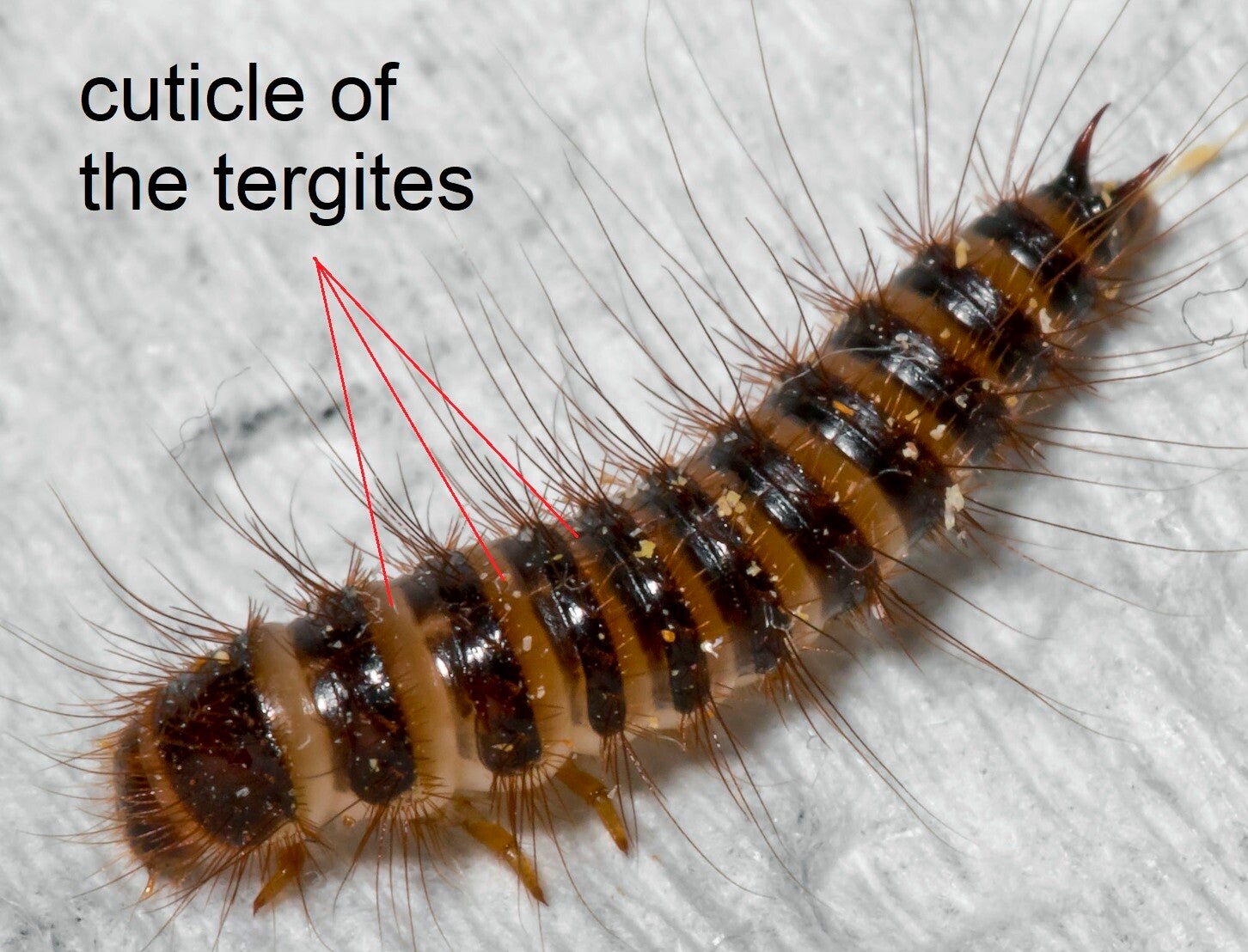
Figure 3. Dermestes lardarius larva, to show the cuticle of the tergites without dark granules of pigment.

Figure 4: Dermestes maculatus larva, to show the dorsal stripe on the tergites.

Figure 5. Two different species larva, both without dorsal stripe on the tergites and with some granules of pigment in their cuticle. 1b: Dermestes ater larva, to show urogomphi with concave posterior surface; 2b: Dermestes murinus larva, to show urogomphi with concave anterior surface.
Made by Sarah Mahie
Created on: 17-01-2026
Latest update: 26-01-2026